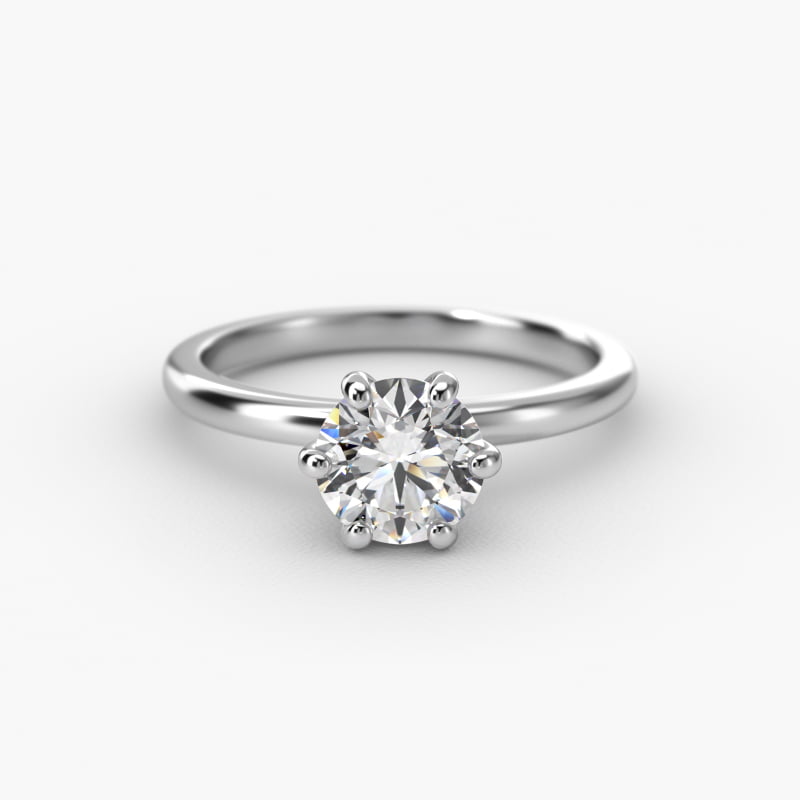
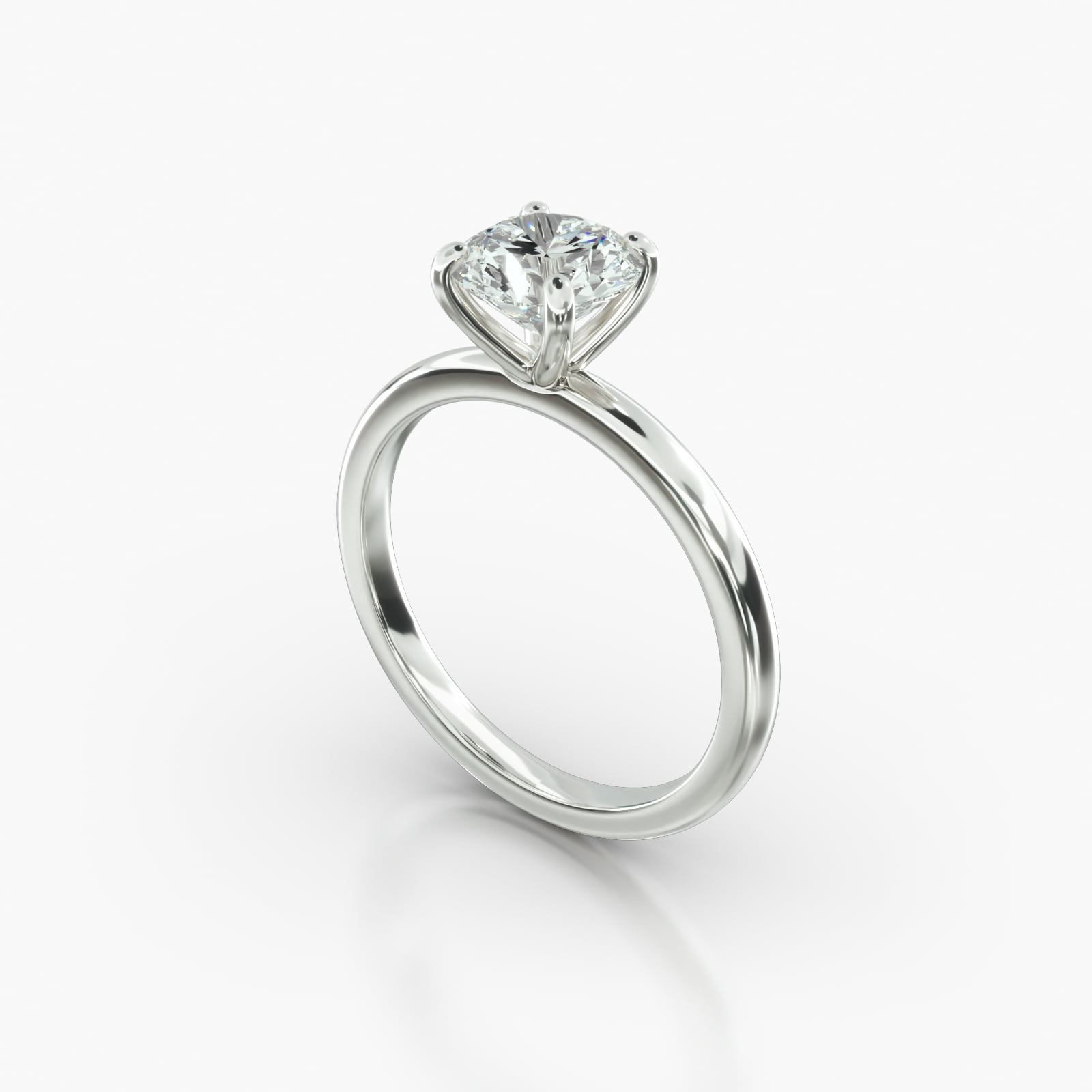
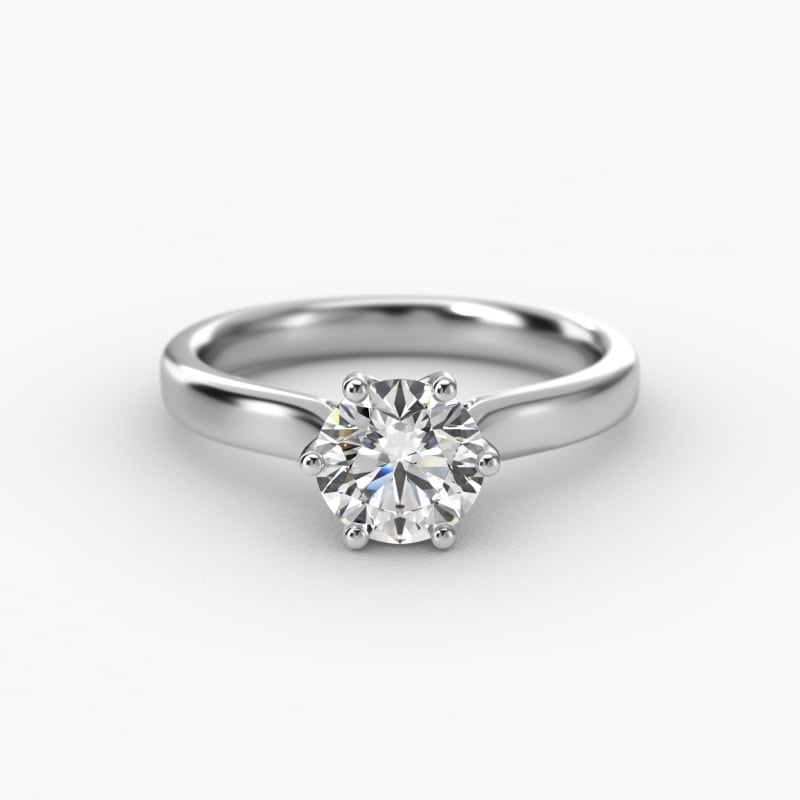
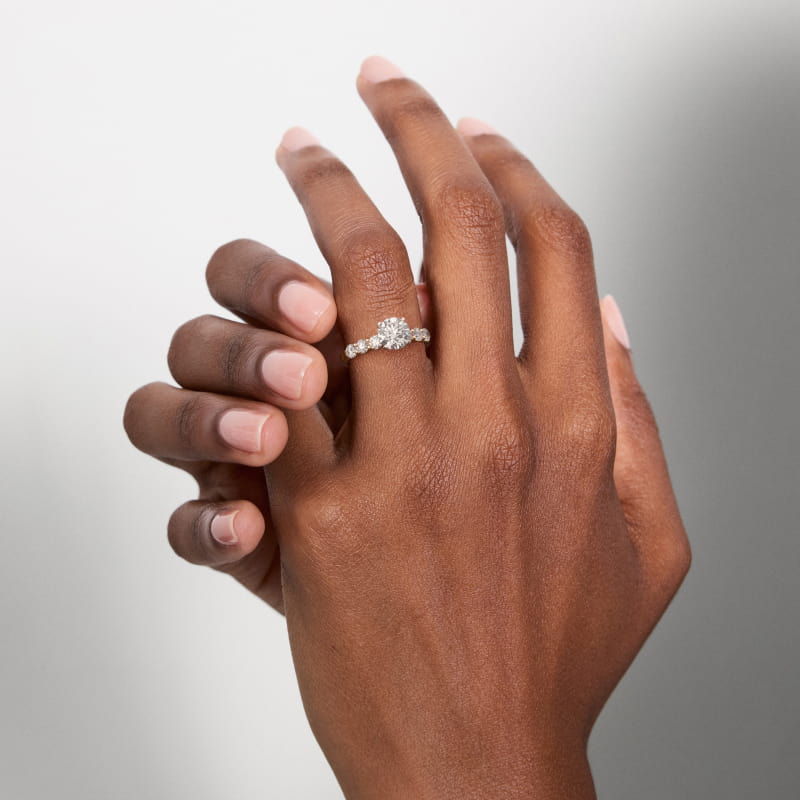
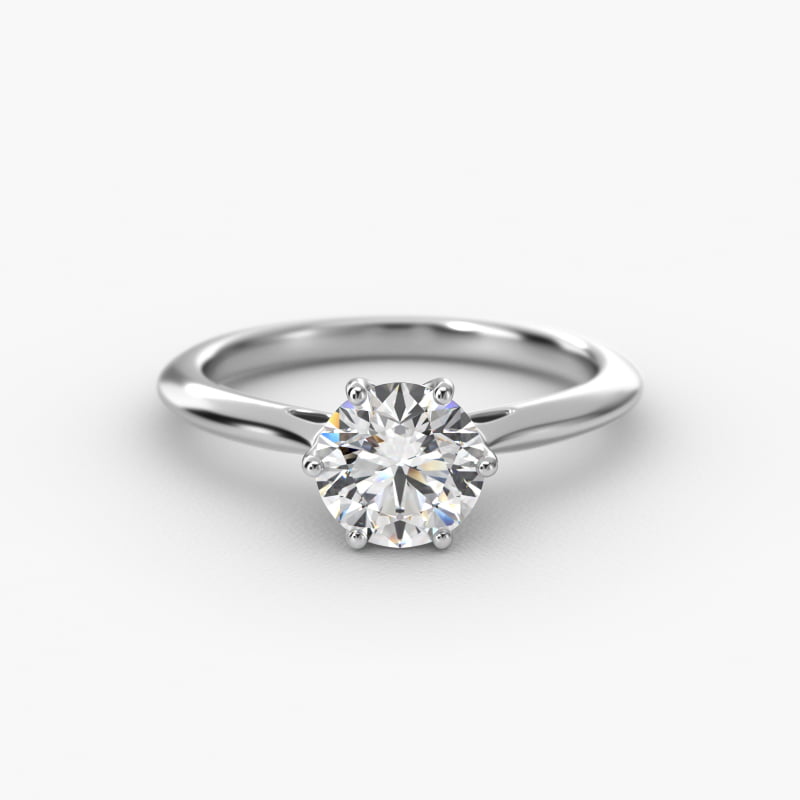
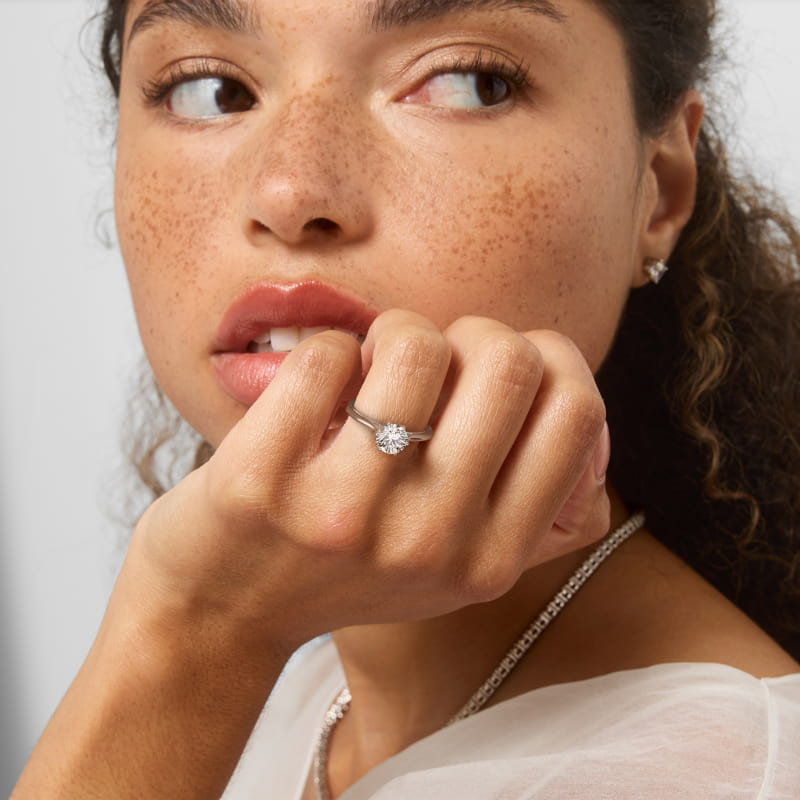
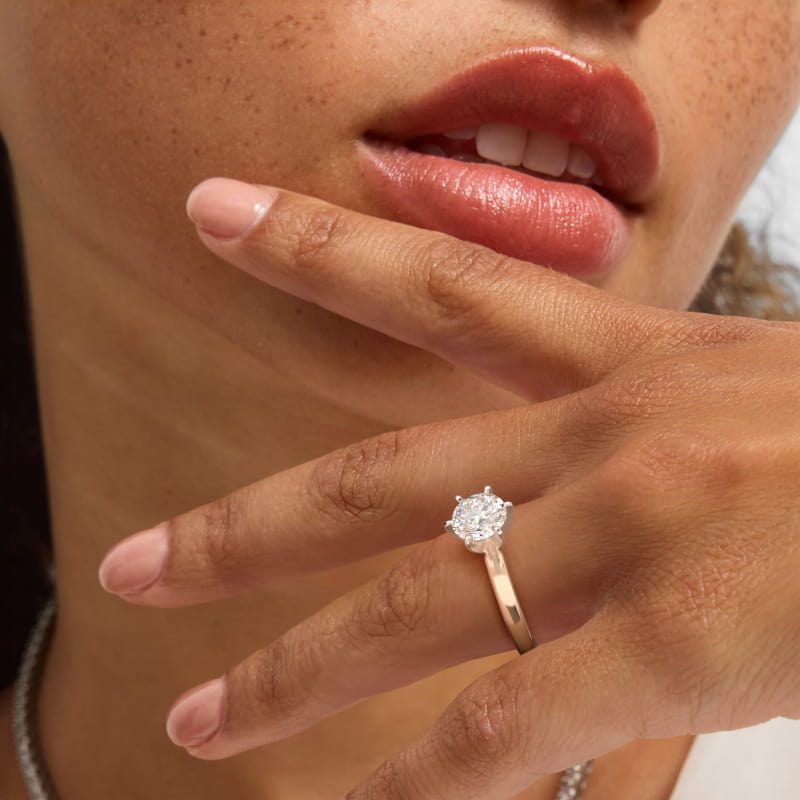
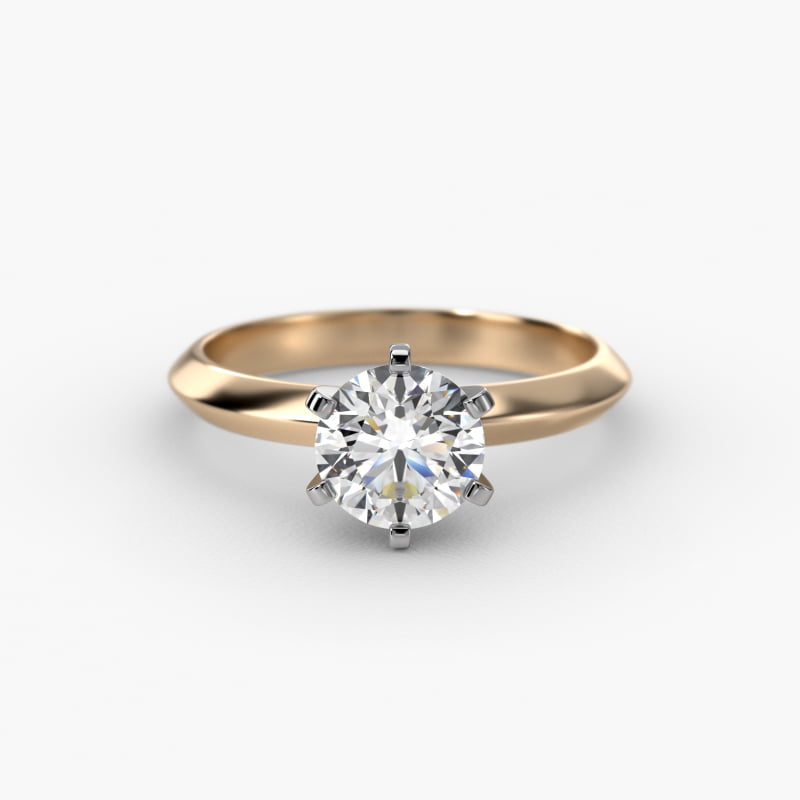
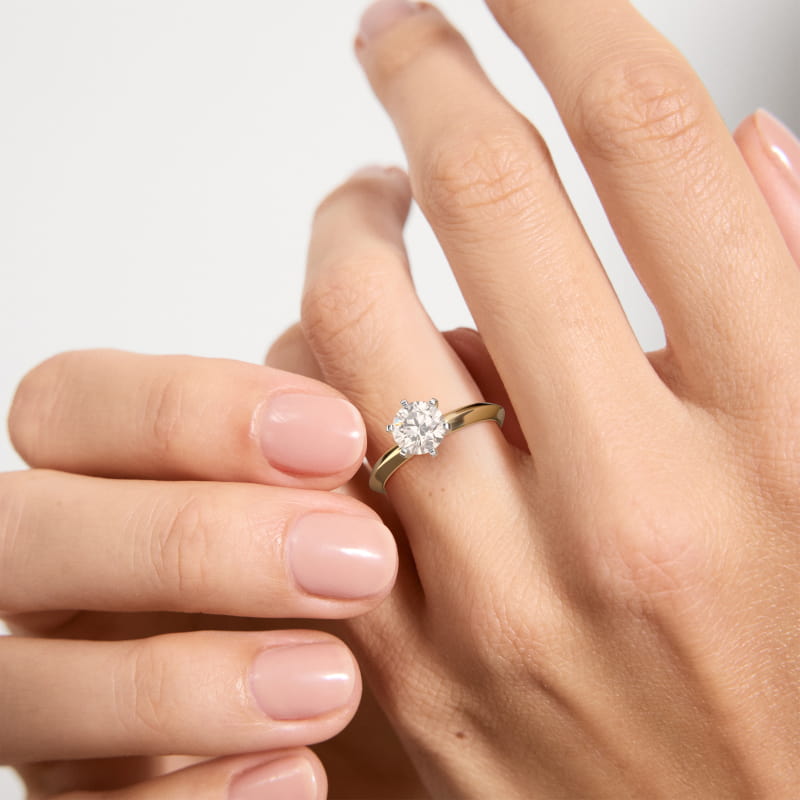
A 6 prong engagement ring features six metal claws securing the center diamond, offering maximum stone protection and traditional styling. This classic setting provides enhanced security compared to four-prong alternatives while creating a softer, more rounded visual frame.
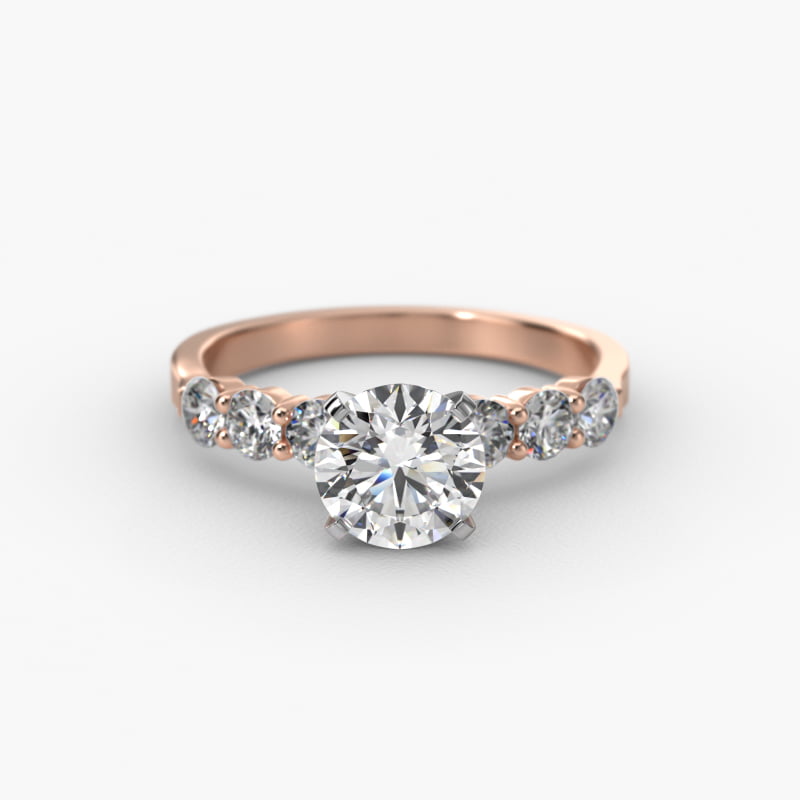
James Allen's six prong engagement ring collection showcases the traditional setting style that offers superior diamond security. Each six prong diamond ring features evenly spaced claws that distribute pressure around the stone, reducing the risk of loss while creating the classic "flower" effect when viewed from above. Available in white gold, yellow gold, rose gold, and platinum, these settings suit round, oval, and cushion cut diamonds particularly well. A six prong setting covers slightly more of the diamond than four prong alternatives, though many prefer the added security and vintage character this creates. The design works beautifully in solitaire styles where the prongs and diamond remain the sole focus, or in pavé and channel set bands where side diamonds add complementary sparkle.
Style Tip: Choose a six prong setting for round diamonds above 1.5 carats where the added security justifies the slightly increased metal visibility, or select it for vintage-inspired styling regardless of size.
Frequently Asked Questions
What is a 6 prong engagement ring?
A 6 prong engagement ring uses six metal claws positioned evenly around the diamond to secure it in place. This traditional setting style offers maximum stone protection with added security compared to four-prong alternatives while creating classic, vintage-inspired appeal.
Is six prong or four prong better?
Six prong settings offer superior security with more points holding the diamond, making them excellent for active lifestyles or valuable stones. Four prong settings show more of the diamond with less metal coverage. Choose six prongs for security, four for maximum stone visibility.
Do six prong settings make diamonds look smaller?
Slightly, as the additional prongs cover more of the diamond's surface than four-prong settings. However, the security benefits often outweigh this minimal visual difference, especially for larger stones where protection matters most and the size reduction is barely noticeable.
What diamond shapes work best with six prong settings?
Round cut diamonds suit six prong settings perfectly, creating the classic "Tiffany" style. Oval and cushion cut diamonds also work beautifully with six prongs. The setting works less commonly with princess cut or emerald cut shapes that typically use four corner prongs.
Are six prong diamond rings more expensive?
Yes, slightly due to additional metal and labor required for six prongs versus four. The price difference is minimal compared to the diamond's cost, making the added security an excellent value for those prioritizing stone protection and traditional styling.
Can I pair a six prong engagement ring with any wedding band?
Yes. Six prong engagement rings pair beautifully with straight wedding bands, curved bands, or eternity rings. The prongs sit above the band, so most wedding ring styles fit flush against the engagement ring without modification.
What's the history of six prong settings?
Six prong settings gained fame through Tiffany & Co.'s iconic design introduced in 1886. The classic style became synonymous with traditional engagement rings, representing security, craftsmanship, and enduring beauty that remains popular over a century later.